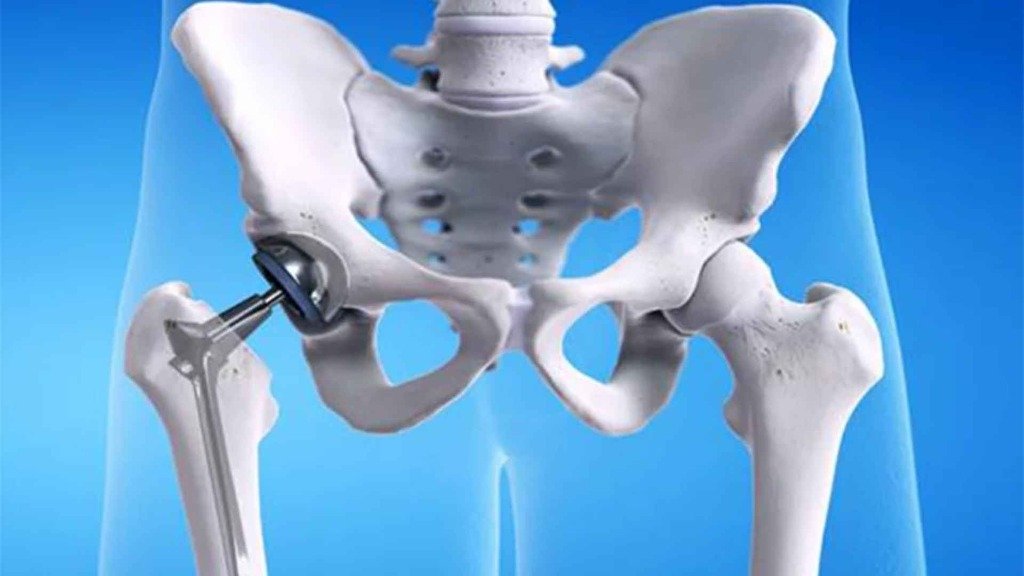
Total Hip Replacement (THR) replaces the worn femoral head and acetabular socket with ceramic and titanium components, eliminating the bone-on-bone pain of end-stage hip arthritis. Assoc. Prof. Dr. Murat Aydın uses a cementless press-fit technique with delta ceramic bearings — one of the most durable implant systems available, with virtually zero wear particles.
1. What Is Total Hip Replacement?
In total hip replacement, the damaged femoral head (ball) is removed and replaced with a titanium stem and ceramic head. The worn acetabular socket is replaced with a press-fit titanium cup lined with a ceramic or highly cross-linked polyethylene insert.
The result is a smooth, pain-free hip joint with a very long lifespan. Ceramic-on-ceramic bearings produce virtually no wear debris — making them the gold standard for younger, active patients.
2. Who Needs Hip Replacement?
Hip replacement is considered when:
- X-rays confirm advanced hip osteoarthritis (coxarthrosis) with joint space loss
- Deep groin or thigh pain is constant and not controlled by medication
- Everyday activities (walking, dressing, stairs) are severely limited
- Avascular necrosis (AVN) has caused femoral head collapse
3. Symptoms
- Deep groin or thigh pain radiating towards the knee
- Difficulty putting on socks, shoes or cutting toenails
- Limping and progressive shortening of walking distance
- Rest pain and night pain not relieved by standard painkillers
- Leg shortening or pelvis tilt due to joint collapse
4. Non-Surgical Options
Before surgery is recommended:
- Anti-inflammatory medication: Short-term pain and inflammation management.
- Physiotherapy: Strengthening muscles around the hip to delay surgery.
- Walking aids: A walking stick on the opposite side reduces hip load by 40%.
- Intra-articular injections: Corticosteroid or hyaluronic acid for early-stage arthritis.
In end-stage hip arthritis, these measures provide only temporary relief and surgery becomes the definitive treatment.
5. The Operation
Duration: 75–100 minutes | Anaesthesia: Spinal or general | Hospital stay: 3–5 nights
- Approach: Posterolateral or direct anterior minimally invasive incision (8–12cm).
- Femoral head removal: The worn femoral head is removed and the femoral canal prepared.
- Cup placement: Titanium acetabular cup press-fitted into the socket at the correct angle.
- Stem insertion: Titanium stem fixed cementlessly — bone grows into the porous coating.
- Bearing assembly: Ceramic head locked onto the stem, ceramic liner locked into the cup.
Tranexamic acid is used throughout to minimise blood loss. The average blood transfusion rate with modern technique is under 2%.
6. Recovery Timeline
- Day 1 after surgery: First physiotherapy session, standing and walking with a frame.
- Days 2–3: Walking in the ward with a walking stick, stairs training.
- Day 5–7: Fly home (compression stockings + anticoagulation).
- Weeks 2–4: Walking unaided indoors. Hip precautions followed for 6 weeks.
- 6 weeks: Hip precautions lifted. Return to driving (right hip: 6 weeks, left hip: sooner).
- 3 months: Full daily activities restored, most patients pain-free.
7. UK vs. Turkey
NHS / UK Private
- NHS wait: 12–18+ months
- Private cost: £11,000–£16,000
Turkey (Dr. Aydın)
- Treatment within: 2–4 weeks
- Significant cost savings
8. Success Rate
95–98% implant survival beyond 20–25 years with ceramic cementless hip replacement.
Patient satisfaction exceeds 95% at 10-year follow-up. The majority of patients describe complete or near-complete resolution of their pre-operative groin pain and return to all daily activities.
Frequently Asked Questions
How long do I stay in Turkey for hip replacement?
Can I fly after hip replacement?
What type of hip implant is used?
When can I walk after hip replacement?
Get Your Free Assessment for Hip Replacement Surgery in Turkey
Send your MRI or X-ray via WhatsApp and receive a personalised treatment plan and all-inclusive quote from our English-speaking team within 24 hours.
Also see: Turkish version of this guide | All treatment guides | Why choose Turkey?